Production
Keeping up with hold check-ins
How Crown flags a hold that has slipped its check-in schedule, what the amber and red warnings mean, and how to clear them.
A hold keeps working after you walk away, and Crown keeps watching the clock. When a scheduled check-in slips, the batch is flagged: amber first, red when it's serious. This article explains how Crown decides a hold is behind, where the warnings appear, and how to catch up.
Where the schedule comes from
Check-in schedules are set on the recipe, not at run time. A wait/hold item's Check in every interval, together with its At each check-in instruction, and a holding stage's own check-in frequency are all part of adding ingredients and steps in the recipe editor. A holding stage's Duration also states a maximum hold time, which matters below.
The schedule goes live when you start the hold on the production floor. Nothing is tracked while the step is still waiting to begin.
How Crown decides you're behind
The clock measures from your most recent activity, not from a fixed timetable. It starts when the hold starts, and every check-in you log re-anchors it: the next check-in is due one interval after your newest one.
Take a Habanero Hot Honey infusion that checks in every 4 hours. If your last check-in was at 9:00, the next is due at 13:00. If you don't get to it until 15:00, logging it then puts the next one due at 19:00. You're back on schedule the moment you log; there is no backlog of missed slots to work off.
What amber and red mean
Amber: one check-in window has slipped. More than one interval has passed since your last logged check-in (or since the hold started, if you haven't logged one yet).
Red: the situation is serious, for one of two reasons:
- No activity for a full extra window: two consecutive check-in windows have now passed with nothing logged.
- The hold ran past its maximum duration: a holding stage that exceeds the maximum hold time stated in the recipe turns red the moment the limit passes, because a process limit has been breached, not just a check-in running late. It stays red until the hold ends.
Escalation follows your own cadence, so a maturation checked weekly and a kettle checked hourly each turn red on their own scale.
The badge on Batches
A numbered badge appears on Batches in the sidebar, and on the Production tab on a phone. It counts the active batches that need attention: each batch with an overdue check-in or a hold past its limit counts once, however many holds it's running. The badge follows you anywhere in the app and clears on its own as batches catch up.
The attention strip on the Batches page
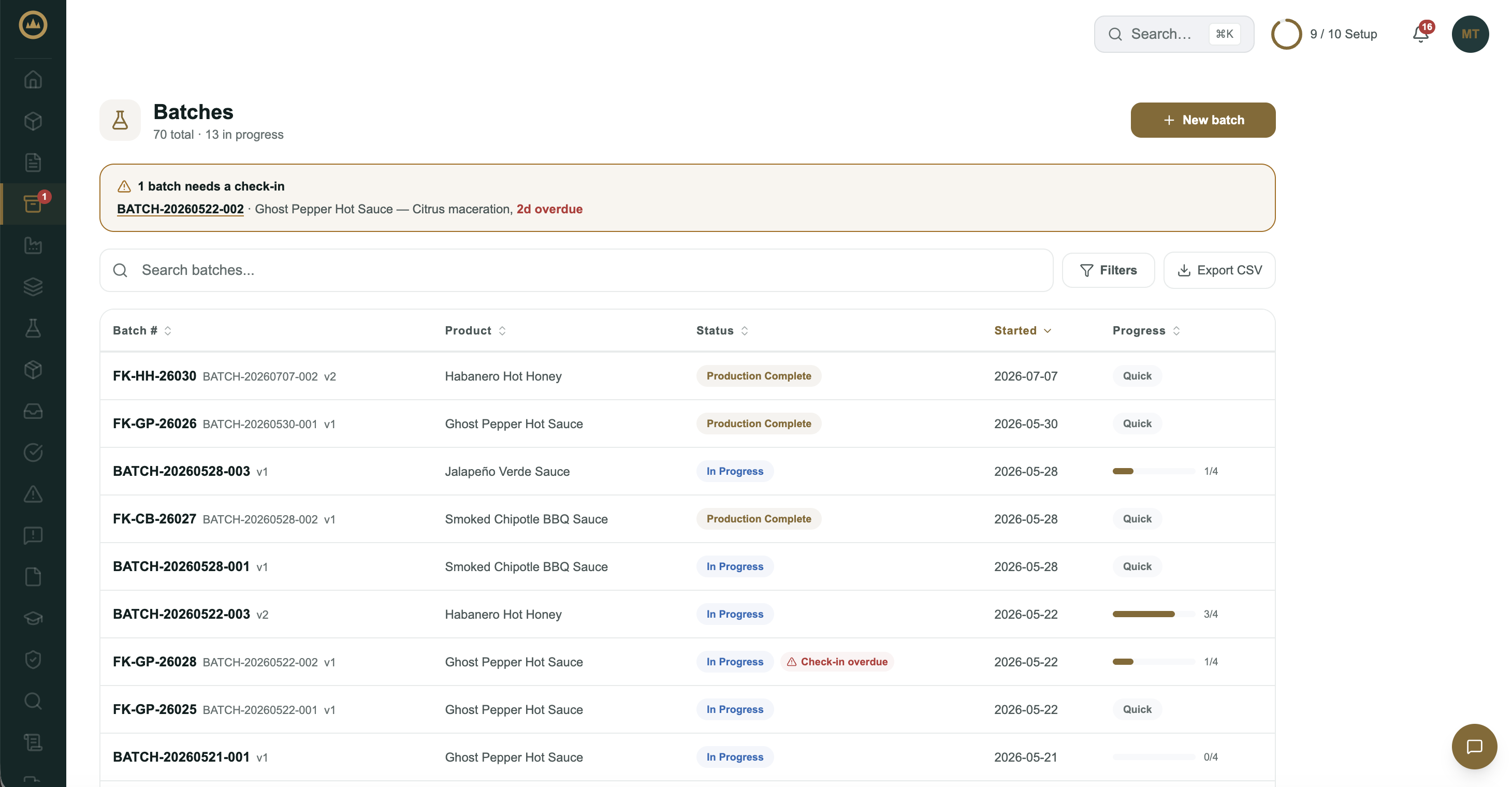
Open Batches and an amber strip at the top names every batch the badge is counting: the batch number (which links straight to the batch), the product, which check-in is due, and how late it is, such as "3h overdue". Affected rows in the list also carry a Check-in overdue marker next to their status.
On the dashboard
Below the active-batch bar, a needs-attention strip lists running batches with an overdue action, most serious first. It leaves out the batch already shown above it and caps at five, so it's a nudge rather than the full list. The plant floor view also colours each running batch's check-in state, so a hold that's slipping shows amber or red right at its vessel's spot.
Catching up
There are two ways to log the check-in you owe:
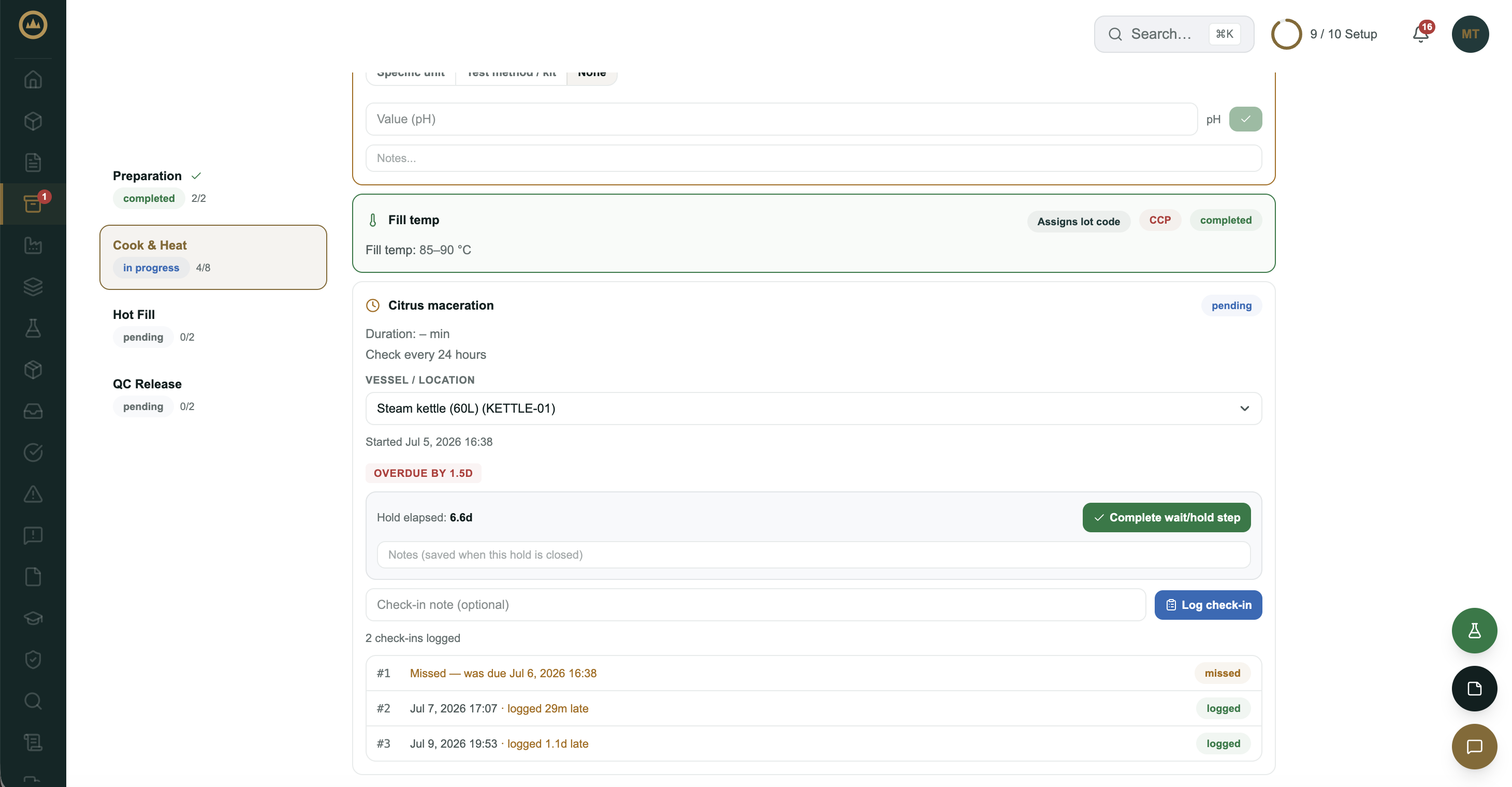
- From the batch: open the batch (the attention strip links straight to it) and find the wait/hold step. A live badge shows where you stand: "Next check-in in 2h", "Check-in due now", or "Overdue by 3h". Add an optional note and select Log check-in.
- From the vessel: scan the equipment's QR label with your phone. Under Active holds on this vessel, the hold appears with its overdue badge; tap Log check-in. If the hold hasn't been started yet, the button reads Start hold instead.
When the hold ends
Completing the wait/hold step ends the schedule and clears the batch from the badge and the strips. If you complete a hold that still has unrecorded check-ins, Crown asks you to confirm first and marks the remaining windows as skipped in the log. See Recording production steps for working through the rest of the stage.
Frequently asked questions
Why is my batch still flagged red after I logged a check-in?
A late check-in clears the moment you log it. If the batch stays red, the hold itself has most likely run past its maximum duration; that warning reflects the hold's total elapsed time, so it stays until the hold is completed.
Does the badge on Batches match the strip on the dashboard?
The badge counts every active batch with an overdue check-in or a hold past its limit. The dashboard strip is a shortened view: it leaves out the batch already shown above it and lists at most five. The strip on the Batches page lists every counted batch.
Can I set check-ins on a condition hold?
Yes. Check in every is available on both hold types, so a hold that ends on a condition (a cooling step, for example) can still require a temperature check every 30 minutes while it runs.